

Why Launch Swag Creates Buzz for Your Brand


Launch swag is promotional merchandise created specifically for product or brand introductions that generates buzz by boosting awareness, sparking excitement, and driving consumer engagement. Understanding why launch swag creates buzz starts with one fact: promotional products outperform every other advertising channel with 85% brand recall and roughly 3,300 impressions per item at an average cost of $0.006 per impression. That number makes branded merchandise one of the most accountable channels in any marketing budget. For brand managers running product launches, the case for swag is no longer intuitive. It is measurable.
Why launch swag creates buzz better than other advertising
Branded merchandise creates a physical connection that digital advertising cannot replicate. A banner ad disappears in seconds. A well-chosen tote bag, insulated tumbler, or branded notebook stays in circulation for months, delivering repeated impressions every time someone uses it. That repeated exposure is the engine behind lasting brand impressions and the emotional connections that exceed digital-only campaigns.
The psychology behind swag’s effectiveness comes down to usefulness and perceived value. When a recipient finds a promotional item genuinely useful, they keep it. Keeping it means using it. Using it means your logo and brand message travel into new environments, in front of new audiences, without any additional spend on your part. That organic reach is what separates swag from paid media.

The numbers confirm the behavior. 78%–82% of consumers report a better impression of a brand after receiving swag, and about 75% say they are more likely to do business with that brand. Those figures represent a conversion signal, not just a sentiment score. Brand managers should treat them as a purchase intent metric.
Touch and novelty also drive sharing. When someone receives a well-designed swag kit at a launch event, the instinct is to photograph it and post it. That organic social sharing extends the campaign’s reach far beyond the original recipient list. The role of branded merchandise in generating word-of-mouth is one of the most undervalued advantages in the channel.
Key behavioral drivers behind swag’s buzz effect:
- Usefulness: Items people actually use generate daily impressions without additional cost.
- Novelty: Unexpected or creative swag triggers social sharing at launch events.
- Reciprocity: Receiving a gift creates a psychological obligation to engage with the brand.
- Portability: Wearables and carry items expose your brand to secondary audiences.
- Emotional memory: Physical objects anchor positive memories to brand experiences.
Pro Tip: Choose swag that solves a real problem for your specific audience. A tech brand launching a new app should consider branded wireless chargers or cable organizers. The more relevant the item, the longer it stays in use, and the more impressions it generates.
What does launch swag cost per impression compared to digital ads?
The cost efficiency of promotional merchandise is the argument that wins over skeptical CFOs. A $6 tote bag generates around 5,000 brand impressions over its lifetime, putting the cost per impression at $0.001. No digital channel comes close to that figure at scale.
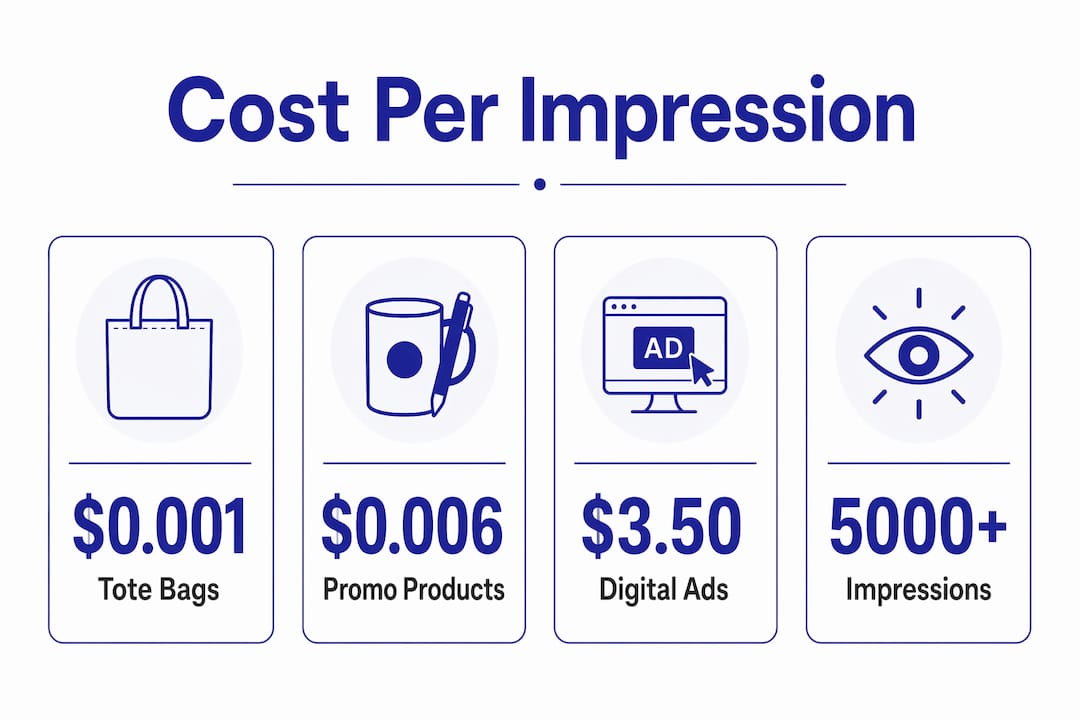
| Swag Item | Approx. Cost | Lifetime Impressions | Cost Per Impression |
|---|---|---|---|
| Tote bag | $6 | ~5,000 | $0.001 |
| Branded pen | $1–$2 | ~1,000 | $0.001–$0.002 |
| Insulated tumbler | $15–$20 | ~6,000+ | $0.002–$0.003 |
| Branded T-shirt | $10–$15 | ~3,500 | $0.003–$0.004 |
| Promotional average | varies | ~3,300 | $0.006 |
Digital advertising costs have risen sharply as platforms compete for the same inventory. Programmatic display, paid social, and video pre-roll all carry CPMs that dwarf the cost-per-impression figures above. ASI CEO Ashish Mittal noted in 2026 that marketing budgets now demand channels that prove ROI, and promotional swag delivers measurable, cost-effective impressions that exceed digital ad engagement. That is not a promotional claim. It is a budget reality.
The measurability of swag has also improved. Brand managers can now track QR codes on packaging, unique landing page URLs printed on items, and redemption rates on swag-exclusive offers. These tools turn a traditionally “soft” channel into a hard-data contributor to campaign reporting.
Pro Tip: Build a swag campaign strategy around items with long natural lifespans. Drinkware, bags, and apparel consistently outperform single-use novelty items in both retention and impression counts. Prioritize utility over cleverness.
How does swag amplify brand storytelling at a launch?
Swag is not just a giveaway. It is a physical expression of what your brand stands for. The best launch swag tells the same story as your campaign creative, your messaging, and your product design. When those elements align, the merchandise reinforces the narrative rather than sitting beside it.
A software company launching a productivity platform might send branded notebooks and premium pens to prospects before a virtual event. The message is clear: this brand helps you think and work better. A wellness brand launching a new supplement line might distribute branded water bottles and resistance bands. The item choice communicates the brand’s values before a single word of copy is read.
Curated swag kits amplify this effect significantly. A well-assembled kit with coordinated colors, a handwritten note, and two or three complementary items creates an unboxing experience that recipients remember and share. The perceived value of a $40 kit often exceeds its actual cost because the curation signals care and attention. That perception directly supports brand favorability.
Practical ways to align swag with your launch story:
- Match item colors and materials to your brand palette and product aesthetic.
- Include a card that explains why each item was chosen, connecting it to your brand values.
- Use the launch theme as a naming convention for the kit itself.
- Limit the kit to three or four items to maintain focus and avoid clutter.
- Add a digital element, such as a QR code linking to an exclusive launch video or offer.
Choosing corporate swag that aligns with your launch narrative is the single most important decision in the campaign. Generic items undercut the story. Relevant items amplify it.
Does sustainable swag boost brand perception in 2026?
Sustainability is no longer a niche concern in promotional merchandise. It is a mainstream purchase driver. 74% of consumers feel more favorable toward brands that give environmentally friendly promotional products. That figure directly connects eco-conscious swag choices to brand favorability and campaign effectiveness.
The carbon efficiency data reinforces the case. Branded merchandise delivers up to 8 times less carbon impact per memorized impression than digital advertising. That finding, from a 2026 study by 51toCarbonZero and industry partners, positions swag as one of the most carbon-efficient media options available to brand managers. It also gives marketing teams a credible sustainability argument when justifying the channel internally.
Practical eco-friendly swag choices for 2026 launches:
- Recycled material bags: Totes made from recycled PET or organic cotton carry both utility and a clear sustainability signal.
- Bamboo or FSC-certified wood items: Pens, notebooks, and desk accessories made from certified sustainable materials.
- Seed paper products: Plantable notecards or packaging that eliminates waste entirely.
- Refillable drinkware: Stainless steel or glass bottles reduce single-use plastic and generate thousands of impressions.
- Locally sourced items: Reducing shipping distances lowers the carbon footprint of the entire campaign.
Sustainability messaging also enhances campaign authenticity. Consumers are skilled at detecting performative environmental claims. Swag made from genuinely sustainable materials, with transparent sourcing, signals that the brand’s values are real. That authenticity translates directly into the buzz that launch campaigns need. Reviewing promotional products vs. digital ads through a sustainability lens reveals that physical merchandise often carries a smaller environmental footprint than the energy-intensive infrastructure behind digital campaigns.
Pro Tip: Print the material composition and sustainability credentials directly on the swag item’s packaging. Recipients who notice and share that detail become advocates for both the product and the brand’s environmental commitment.
Key Takeaways
Launch swag creates measurable buzz because it delivers repeated physical impressions at a fraction of the cost of digital advertising, while building genuine consumer favorability and brand loyalty.
| Point | Details |
|---|---|
| Brand recall advantage | Promotional products achieve 85% brand recall, outperforming every other advertising channel. |
| Consumer favorability | 78%–82% of consumers report a better brand impression after receiving swag. |
| Cost per impression | A $6 tote bag generates ~5,000 impressions at $0.001 cost per impression. |
| Sustainability edge | Eco-friendly swag increases favorability with 74% of consumers and carries 8x less carbon impact than digital ads. |
| Storytelling alignment | Swag kits tied to launch themes amplify brand narrative and drive organic social sharing. |
What I’ve learned from watching swag campaigns succeed and fail
Brand managers often treat swag as an afterthought. It gets ordered two weeks before the launch, chosen from a generic catalog, and shipped without any connection to the campaign narrative. The result is a branded pen that ends up in a drawer and a missed opportunity to create genuine excitement.
The campaigns that generate real buzz share one characteristic: the swag was chosen first, not last. When the merchandise decision happens at the same time as the creative brief, the items can be designed to carry the story. That alignment is what turns a giveaway into a conversation starter.
I have also seen brand managers underestimate the power of restraint. A single, well-chosen item with excellent quality and clear brand relevance outperforms a bag full of mixed novelty items every time. Recipients remember the one thing that surprised them. They forget the pile.
The nearly 80% consumer preference for promotional products over other advertising types is not an accident. It reflects a fundamental human preference for things that are useful, tangible, and personal. Brand managers who respect that preference and design their swag accordingly will always outperform those who treat it as a line item.
The future of launch swag points toward personalization and sustainability in combination. Items that are both relevant to the individual recipient and made from responsible materials will generate the strongest favorability scores. That combination is achievable at scale with the right sourcing partner and enough lead time.
— Jerry
Discountswag: your launch swag partner for 2026 campaigns
Brand managers who want their next launch to generate real excitement need merchandise that is well-made, on-brand, and delivered on time.
Discountswag carries an extensive catalog of promotional items for brand awareness across every category, from drinkware and apparel to tech accessories and eco-friendly options. The 2026 product selection is built for marketing teams that need to prove ROI, with pricing that makes high-volume launches financially viable. Discountswag also offers expert guidance on item selection, helping brand managers match merchandise to campaign goals. If your next launch deserves swag that actually moves the needle, explore what Discountswag has available and see why branded giveaways matter for ROI.
FAQ
What is launch swag and why does it create buzz?
Launch swag is branded merchandise distributed during a product or brand introduction to generate awareness and excitement. It creates buzz because physical items deliver repeated impressions, trigger social sharing, and build consumer favorability in ways digital ads cannot match.
How does swag compare to digital advertising on cost per impression?
Promotional products average $0.006 per impression, with high-use items like tote bags reaching as low as $0.001. Digital advertising channels consistently carry higher CPMs, making swag one of the most cost-efficient options in a marketing budget.
What types of swag generate the most impressions at a launch?
Items with long natural lifespans generate the most impressions. Insulated drinkware, tote bags, and branded apparel consistently outperform single-use novelty items because recipients use them repeatedly in public settings.
Does eco-friendly swag actually improve brand perception?
Yes. 74% of consumers report a more favorable view of brands that give environmentally friendly promotional products, and branded merchandise carries up to 8 times less carbon impact per memorized impression than digital advertising.
How should brand managers measure swag campaign effectiveness?
Brand managers can track swag ROI through QR codes on items, unique landing page URLs, redemption rates on swag-exclusive offers, and post-campaign brand recall surveys. These tools convert swag from a soft spend into a measurable campaign channel.
 Bottle Carriers
 Mugs
Mugs