

5 Rules to Choose Woven vs Embroidered Patches for Brand Managers

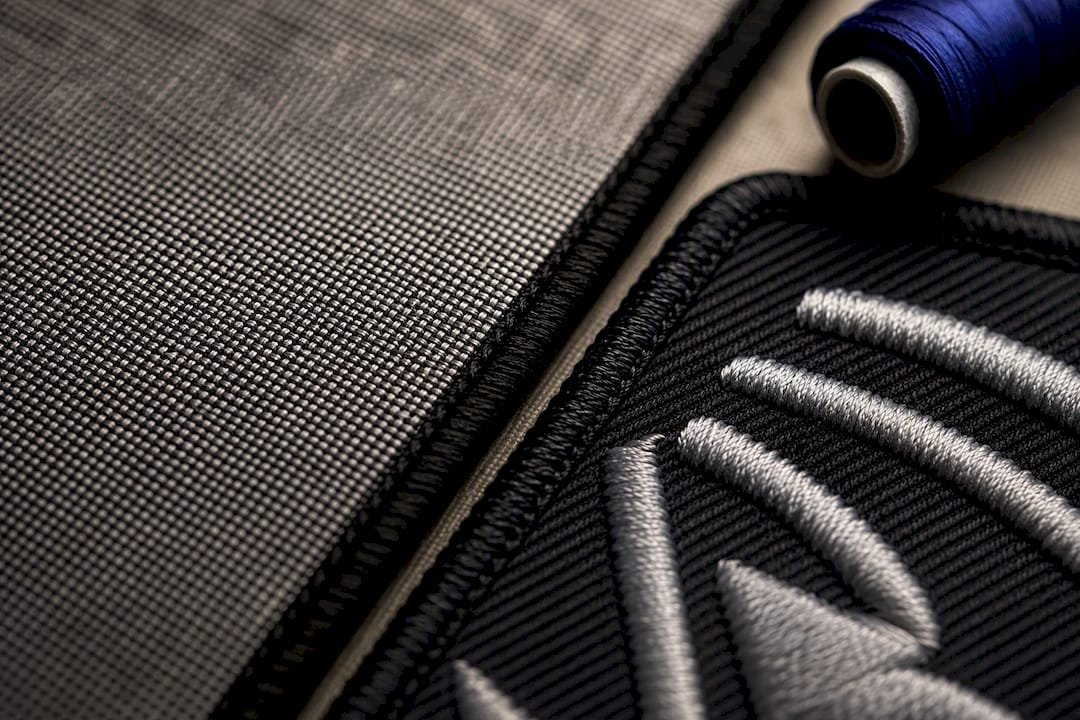
Choose woven patches when your design has fine detail, small text, or gradients and your blank is lightweight or stretchy, like a soft-knit beanie or performance polo. Choose embroidered patches when you want a raised, textured look for bold logos on structured items like trucker hats, jackets, or canvas totes. The trade-off comes down to detail versus texture: woven holds crisp lines but sits flatter, while embroidered adds dimension but loses sharpness on tiny elements.
TL;DR:
- Woven patches are better for fine detail, small text, and gradients, and are more cost-effective for complex designs on soft or stretchy fabrics.
- Embroidered patches are preferable for bold logos on structured items, offering a textured, traditional look but struggle with small details and thin lines.
- The durability of patches depends mainly on attachment type, with sew-on and hook-and-loop backing lasting longer than heat-seal, especially in frequent laundering.
- For lightweight, stretchy, or soft fabrics, woven patches provide a flatter, more flexible profile; embroidered patches suit heavier, structured materials.
- Design size, fabric type, and intended wear influence patch choice; small, detailed artwork favors woven, while bold logos on firm surfaces favor embroidery.
Table of Contents
- What woven patches are and when they win
- What embroidered patches are and when they win
- Woven and embroidered patches compared side by side
- How to choose the right patch for your project
- Attachment, finishing, and care for lasting patches
- What years of order requests taught us about patches
- Get bulk patches without the guesswork
- Sources
- FAQ
What woven patches are and when they win
Woven patches are made by weaving thin threads into a fabric backing, producing a flat surface with far more resolution than traditional embroidery. That construction is what lets woven patches reproduce tiny text and gradients, details that would blur or disappear if stitched. According to Printify’s comparison guide, woven patches can hold legible text down to about 2 millimeters, though that figure is a rule of thumb rather than a guarantee across every font and thread color combination.
Because the surface stays thin and flexible, woven patches sit comfortably on fabrics that move or stretch, avoiding the stiffness that can cause puckering on delicate material.
Common use cases and recommended blanks include:
- Soft-knit beanies, where a thick patch would distort the knit.
- Performance polos and athletic wear, where flexibility matters as much as branding.
- Backpacks and bags with lightweight panels, where a heavy patch could pull at the seams.
Woven patches also tend to cost less for complex designs, since the process handles fine art without needing digitizing workarounds that embroidery often requires.
What embroidered patches are and when they win
Embroidered patches build raised stitching onto a twill backing, creating the thick, tactile surface most people picture when they hear the word “patch.” That texture is the appeal: it reads as a traditional, premium touch on jackets, varsity gear, and uniforms, and it holds up visually from a distance in a way flat woven patches sometimes don’t.
The trade-off is detail. Thread has width and loft, so tiny text, thin lines, and gradients tend to blur or fill in, which is why Impressions Magazine’s guide to ordering embroidered emblems points designers toward bold, simple graphics rather than intricate artwork.
Embroidered patches work best for:
- Bold, simple logos with clear shapes and limited color counts.
- Structured blanks like trucker hats, canvas totes, and heavier jackets that can support the added thickness.
- Uniform programs, where the traditional look reinforces a sense of permanence and quality.
Backing and edge choices, covered next, also shape how embroidered patches perform over time.
Woven and embroidered patches compared side by side
The decision usually comes down to five factors: detail level, thickness, blank compatibility, cost drivers, and attachment method.
- Detail level: Woven handles small text and gradients down to roughly 2 millimeters; embroidered works best with bold shapes and limited fine detail, per Printify.
- Thickness and hand feel: Woven stays thin and flexible; embroidered is thicker and stiffer, better suited to garments that can absorb that bulk.
- Recommended blanks: Woven fits soft-knit and stretch fabrics; embroidered fits structured caps, jackets, and totes.
- Cost drivers: Complex woven art is often cheaper to produce than an embroidered version of the same design, since fine embroidery may need simplification or extra digitizing work.
- Attachment methods: Both types support sew-on, heat-seal, or hook-and-loop backing, but the choice interacts with border style, covered in the finishing section below.
Pro Tip: If your design includes gradients or text under about 3 millimeters, default to woven. If it’s a bold single-color logo meant for a structured cap, embroidered is the safer bet.
Before sending a brief to production, paste this checklist into your order notes:
- Design scale: smallest text or line width in millimeters
- Blank type: structured or lightweight/stretchy
- Preferred backing: sew-on, heat-seal, or hook-and-loop
- Border preference: Merrow, satin, overlock, or laser-cut
- Expected laundry cycles: occasional, regular, or industrial
How to choose the right patch for your project
- Evaluate the artwork at thumbnail size. Shrink your design to the smallest size it will actually appear. If it stays legible, embroidery may work; if lines merge or text disappears, switch to woven, a test Printify recommends as the quickest way to catch problems before production.
- Match the patch to the blank. Structured items like caps and jackets can carry embroidered thickness; soft or stretchy fabrics need the flatter woven profile.
- Choose attachment and border together. Merrow borders limit you to simpler shapes and don’t accept heat-seal adhesive, while satin or laser-cut edges support custom shapes and adhesive backing, according to Impressions Magazine.
- Request a pre-production sample. For orders where design intent isn’t obvious from a spec sheet, a physical swatch settles questions faster than back-and-forth revisions.
For heavy-laundering programs like uniforms, specify sew-on or hook-and-loop backing up front rather than defaulting to heat-seal. Batch size also matters: smaller runs often justify a sample step that larger, repeat orders can skip once the spec is locked in.
Attachment, finishing, and care for lasting patches
Border style affects both looks and durability. Merrow borders are thick, durable, and best for simple stock shapes, while satin and overlock edges are thinner and compatible with adhesive backing; laser-cut or no-border finishes suit custom shapes, per Impressions Magazine.
- Heat-seal is the fastest, least expensive attachment method but wears faster under frequent washing.
- Sew-on backing holds up better through repeated laundering.
- Hook-and-loop suits patches that need to be swapped often, like interchangeable name tags.
Heat-seal attachment is generally less durable under frequent laundering than sew-on backing, a distinction worth building into any uniform program from the start, as Impressions Magazine notes.
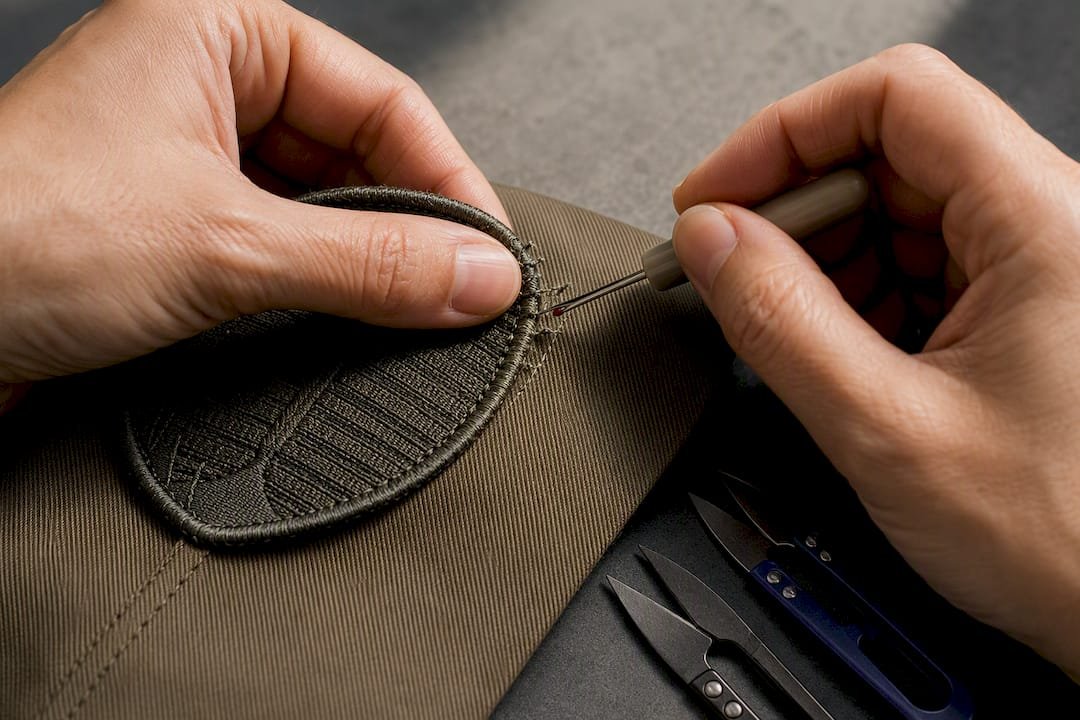
Removal and reapplication are usually straightforward: heat-sealed patches can often be lifted with heat and reapplied with fresh adhesive, and sewn patches can be unpicked and restitched, which is common practice when logos change on standing uniform orders, according to Impressions Magazine’s removal guide.
What years of order requests taught us about patches
A distributor handling bulk branded merchandise commonly sees this pattern across orders: match the patch to the blank and the use case, not the other way around. Promotional giveaways tend to favor woven for detailed logos on soft items, while uniform programs lean embroidered for durability and a structured look.
— Jerry
Get bulk patches without the guesswork
Once you know which patch type fits your design, the next step is production, and that’s where a distributor earns its keep. Discount Swag handles Discount Swag Distribution for bulk branded orders, including fully custom branded boxes and rush orders when timelines get tight.
Whether you’re outfitting a sales team in embroidered caps or adding woven patches to a run of tote bags, the goal is the same: get the right patch on the right blank without rework.
- Bulk ordering across apparel, bags, and drinkware categories
- Rush turnaround for time-sensitive launches
- Fulfillment to single or multiple company locations
If you’re weighing patches against other decoration methods, our comparison of embroidered polos versus printed tees covers similar trade-offs for apparel. Ready to move forward? Request a quote and tell us your design and blank, and we’ll help you land on the right patch type before production starts.
Sources
Claims on detail thresholds, borders, and attachment durability draw on Printify’s patch guide, Impressions Magazine’s ordering guide, its emblem technology comparison, and its guide to removing and replacing emblems. For placement guidance across garment types, see Vain New York’s logo placement guide.
- Woven vs Embroidered Patches: POD Seller Guide — Printify
- Guide to Ordering the Perfect Embroidered Emblem — Impressions Magazine
FAQ
Which patch type holds up better to frequent washing?
Durability depends more on attachment method than patch style: sew-on and hook-and-loop backings outlast heat-seal adhesive under frequent laundering. Embroidered patches sewn with color-fast polyester thread are built to withstand industrial washing, according to Impressions Magazine.
Can small text and gradients work on embroidered patches?
Small text and gradients tend to blur on embroidered patches because thread has width and loft. Woven patches handle this kind of detail far better, reproducing text down to about 2 millimeters, per Printify.
Why do embroidered patches sometimes cause puckering on fabric?
Puckering happens when a thick, stiff embroidered patch is applied to a lightweight or stretchy blank that can’t support its weight. Matching embroidered patches to structured items and woven patches to soft fabrics avoids this problem, as outlined in Printify’s guide.
Can you heat-seal a Merrow border patch?
No. Merrow borders are too thick for adhesive coverage, so heat-seal application does not work with that edge type. Satin, overlock, or laser-cut edges are compatible with heat-seal adhesive, according to Impressions Magazine.
What drives the cost difference between woven and embroidered patches?
Cost depends on design complexity and production steps rather than patch type alone. Detailed art often costs less as woven since embroidery may need simplification or extra digitizing to render the same design.
 Bottle Carriers
 Mugs