

Drop Shipping for Promotions: A Marketer’s 2026 Guide


Drop shipping for promotions is a fulfillment model where a third-party supplier stores, packs, and ships branded merchandise directly to recipients on behalf of your business. You never touch the inventory. The supplier handles the physical logistics while you manage the campaign, the branding, and the supplier relationship. This approach is the industry term “promotional drop shipping,” and it removes the two biggest barriers to scaling branded merchandise campaigns: upfront inventory costs and warehousing overhead. For marketing professionals and business owners, understanding what is drop shipping for promotions means recognizing it as a distribution strategy, not just a retail tactic.
What is drop shipping for promotions and how does it work?
Promotional drop shipping is defined as a third-party fulfillment arrangement where branded merchandise moves from supplier to recipient without the marketing team ever holding stock. The business places an order with a supplier, the supplier ships the item directly to the end recipient, and the package carries the brand’s identity rather than the supplier’s. This model is distinct from retail drop shipping because the goal is brand awareness and campaign impact, not product sales.
The operational flow follows five clear steps.
- Supplier identification. Select a supplier who carries the promotional products you need and can apply your branding. Verify they offer blind shipping and custom packaging before committing.
- Integration and order routing. Connect your campaign management system or e-commerce platform to the supplier’s order processing system. Automated apps forward orders in under one minute, and most suppliers ship within 1–3 business days.
- Branding configuration. Set up blind shipping so the packing slip shows your company name, not the supplier’s. Add branded inserts, gift notes, or custom packaging to reinforce the campaign message.
- Order fulfillment. The supplier picks, packs, and ships each order to the recipient. Your team monitors the queue but does not handle any physical product.
- Tracking and communication. Recipients receive tracking information tied to your brand. You monitor delivery performance to catch delays before they affect campaign timelines.
Pro Tip: Request a test shipment to your own office before launching any campaign. This reveals exactly what the recipient sees, including packaging quality, insert placement, and whether the blind shipping is configured correctly.
The blind shipping requirement is non-negotiable for promotional campaigns. Without it, recipients see the wholesale supplier’s name on the package, which undermines the brand impression the campaign is designed to create.
What are the key benefits of drop shipping for promotional campaigns?
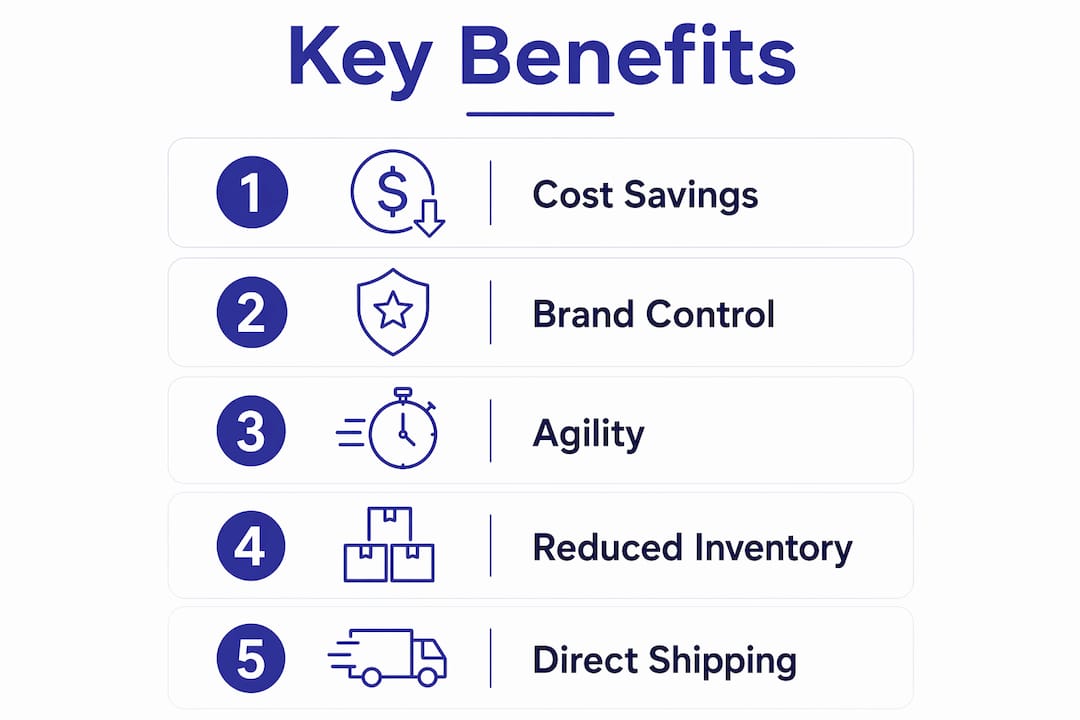
Promotional drop shipping delivers advantages that traditional bulk-order fulfillment cannot match. The benefits are structural, not incidental.
- Lower overhead costs. Warehousing and inventory management represent 20–30% of logistics costs in traditional fulfillment models. Removing those costs frees budget for creative, media, or additional product variety.
- Agile campaign testing. Drop shipping allows demand testing with minimal financial risk. You can run a small batch of branded tote bags for one audience segment and a different product for another, without committing to bulk minimums on either.
- No dead stock. Traditional promotional orders often result in unused merchandise sitting in storage after a campaign ends. Drop shipping eliminates that problem entirely because you order only what recipients actually claim or receive.
- Geographic reach without infrastructure. A supplier network can ship to multiple regions simultaneously. Your team does not need warehouse space in each market to run a national or global campaign.
- Faster campaign launch. Without the lead time required to receive, inspect, and store inventory, campaigns can go live significantly faster. This matters when promotional timing is tied to product launches, trade shows, or seasonal windows.
The agility factor is what separates promotional drop shipping from conventional merchandise ordering. Marketing teams can respond to campaign performance data and adjust product selection mid-flight without financial penalty.
The branded merchandise conversion data reinforces why this matters. Physical promotional items consistently outperform digital-only touchpoints for brand recall, and drop shipping makes those items accessible at any campaign scale.

How do you choose the right drop shipping partner for promotions?
Partner selection is the single most consequential decision in a promotional drop shipping program. A supplier who fails on packaging or delivery damages your brand, not theirs.
- Blind shipping capability. The supplier must ship packages that display your company name, not theirs. Branded packing slips and blind shipping are the minimum standard. Recipients who see a wholesale supplier’s name on a gift package lose the brand association the campaign was designed to build.
- Custom insert and packaging options. A supplier who can include branded inserts, custom tissue paper, or personalized gift notes gives you control over the unboxing experience. This is where promotional drop shipping separates itself from generic fulfillment.
- Reliable delivery timelines. Poor delivery experiences increase return rates and damage brand perception. Confirm the supplier’s average ship time and ask for data on their on-time delivery rate before signing any agreement.
- Quality verification through samples. Digital mockups do not reveal print quality, material weight, or how a logo looks on the actual product. Order physical samples from every supplier before approving them for campaign use.
- Communication responsiveness. A supplier who takes 48 hours to answer a question about a delayed shipment is a liability during a time-sensitive campaign. Test their response time during the vetting process, not after launch.
Pro Tip: Build a supplier scorecard that tracks on-time delivery rate, defect rate, and response time across every campaign. After three campaigns, the data tells you which partners to expand and which to replace.
Discountswag works with marketing teams specifically on this vetting process. Understanding what a promotional product distributor does clarifies how a distributor relationship differs from sourcing directly from a manufacturer, and why that distinction matters for brand protection.
What are the most common pitfalls in promotional drop shipping?
Promotional drop shipping introduces specific risks that retail drop shipping does not. Marketing professionals need to account for them before campaigns go live.
The most significant pitfall is loss of control over the unboxing experience. When a supplier ships a generic brown box with no insert and a packing slip that reads like a warehouse receipt, the promotional impact disappears. The recipient receives a product but has no emotional connection to the brand that sent it. Verifying custom inserts, branded slips, and gift notes before launch is the only reliable fix.
Quality issues are the second major risk. Physical samples reveal print registration errors, material inconsistencies, and logo color shifts that digital mockups never show. A campaign that ships 500 branded mugs with a faded logo does more damage than no campaign at all.
Logistics delays create a third category of risk. Promotional campaigns are often tied to specific dates: a product launch, a conference, a holiday window. A supplier who misses ship dates by even two days can render an entire campaign ineffective. Build buffer time into every campaign timeline and confirm the supplier’s peak-season capacity before committing.
Over-reliance on supplier communication without structured oversight is the fourth pitfall. Drop shipping shifts your team from hands-on logistics to relationship management. That shift requires active monitoring of delivery metrics, not passive trust that the supplier will perform. Set up weekly performance reviews during active campaigns and monthly reviews during planning periods.
Jerry’s take: what actually separates good promotional drop shipping from bad
The conventional advice on promotional drop shipping focuses on cost savings. That framing misses the point.
The real value is control over brand experience at scale. A well-run drop shipping program lets you send a premium branded gift to 2,000 recipients across 15 cities without a single person on your team touching a box. Done right, corporate gifting campaigns can operate at a global scale with white-label supplier partnerships that make every shipment feel like it came directly from your brand.
The mistake I see most often is treating supplier selection as a procurement task rather than a brand decision. Marketing teams spend weeks designing the perfect branded notebook and then hand fulfillment to the cheapest supplier they can find. The notebook arrives in a plain poly mailer with no insert. The recipient has no idea who sent it or why. The campaign fails not because the product was wrong, but because the delivery experience was an afterthought.
Invest in the sample process. Order from every supplier before any campaign launches. Approve the packaging, the insert, the packing slip, and the outer box. Then monitor delivery performance on every single shipment. The swag box fulfillment model works when the brand experience is consistent from the moment the box leaves the warehouse to the moment the recipient opens it. That consistency requires active oversight, not set-and-forget logistics.
— Jerry
Discountswag’s drop shipping support for marketing teams
Marketing teams that want to run promotional drop shipping campaigns without building supplier relationships from scratch have a direct path forward with Discountswag.
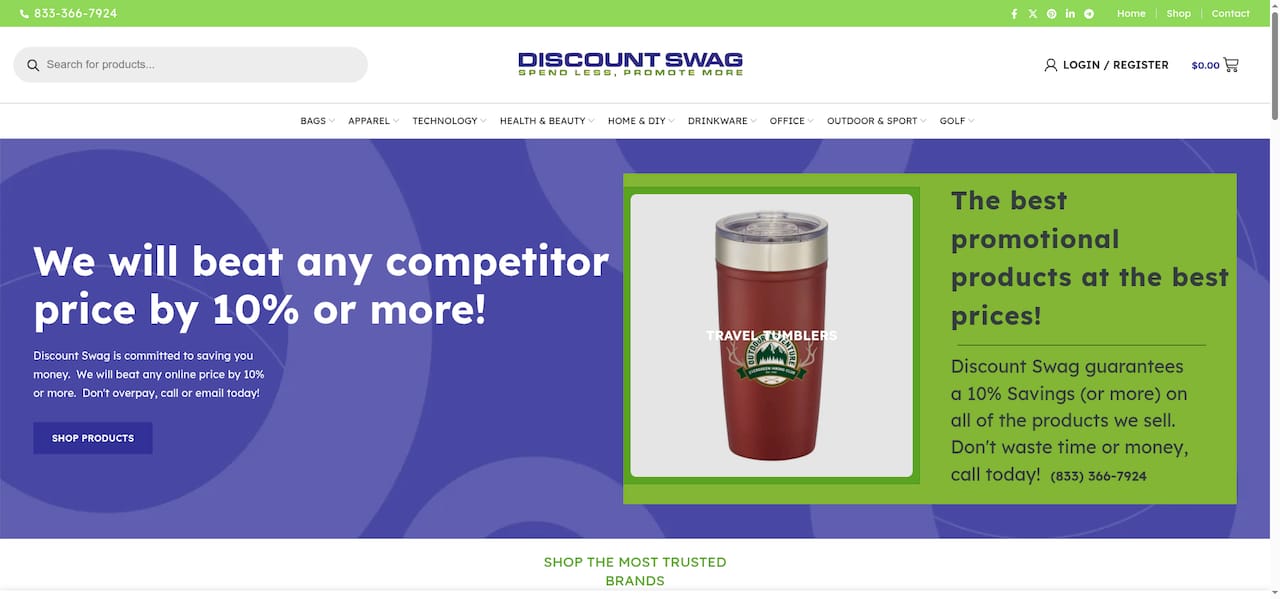
Discountswag specializes in customizable promotional items designed for drop shipping fulfillment, with blind shipping, branded inserts, and packaging options built into the service. The catalog covers branded merchandise across product categories suited to awareness campaigns, event giveaways, and corporate gifting programs. For marketing professionals who want to see what products perform best in 2026 campaigns, the types of branded promotional products guide covers the full range with campaign-specific recommendations. Discountswag handles the logistics so your team focuses on the campaign.
Key Takeaways
Promotional drop shipping works when suppliers are vetted for blind shipping, branding capability, and delivery reliability before any campaign launches.
| Point | Details |
|---|---|
| Core model definition | Drop shipping for promotions means a third-party supplier ships branded items directly to recipients without the brand holding inventory. |
| Cost reduction | Removing warehousing eliminates 20–30% of traditional logistics costs, freeing budget for campaign creative and product variety. |
| Partner vetting is critical | Blind shipping, branded inserts, and physical sample approval are non-negotiable before any supplier goes live on a campaign. |
| Agility over bulk ordering | Drop shipping lets marketing teams test multiple products across audience segments without bulk minimums or dead stock risk. |
| Active oversight required | Outsourcing fulfillment does not mean passive management. Delivery metrics and supplier communication need structured weekly review. |
FAQ
What is drop shipping for promotions?
Drop shipping for promotions is a fulfillment model where a third-party supplier ships branded merchandise directly to campaign recipients on behalf of the marketing team. The business never holds inventory; the supplier manages storage, packing, and delivery.
How does promotional drop shipping differ from retail drop shipping?
Retail drop shipping focuses on product sales and margin. Promotional drop shipping focuses on brand impact, which means blind shipping, branded packaging, and custom inserts are required elements rather than optional upgrades.
Is drop shipping profitable for small businesses running promotions?
Drop shipping for small businesses reduces upfront costs by eliminating inventory and warehousing expenses, making promotional campaigns financially accessible at smaller scales. The model is profitable when supplier quality and delivery performance are actively managed.
What is blind shipping and why does it matter for promotions?
Blind shipping means the package displays the brand’s name rather than the supplier’s name on the packing slip and return address. Without it, recipients see the wholesale supplier’s identity, which breaks the brand association the campaign is designed to create.
How do you avoid quality problems in promotional drop shipping?
Order physical samples from every supplier before campaign launch. Digital mockups do not reveal print quality, material weight, or packaging condition. Sample approval is the only reliable method to catch quality issues before they reach recipients.
 Bottle Carriers
 Mugs
Mugs