

Promotional Item Cost Negotiation: 2026 Buyer’s Guide


Promotional item cost negotiation is the process marketing professionals and procurement officers use to secure the best pricing and terms for branded merchandise. The median unit cost for promotional products sits at $9.53, and distributors typically target gross margins of 30–40%. That margin gap is your negotiation room. Teams that understand pricing structure, quantity breaks, and total cost of ownership consistently pay less and get more from every campaign dollar.
What are the key cost components in promotional product pricing?
Promotional product pricing is not just a unit cost. Every quote includes several layers that add up fast, and each one is a potential negotiation point.
The base product price is what most buyers focus on, but setup fees, decoration charges, and freight can add 20–35% on top of that number. Setup fees cover the cost of creating screens, dies, or digital files for your logo. Decoration fees vary by method: screen printing costs less per unit at high volumes, while laser engraving carries a higher per-unit cost but delivers a premium finish. Shipping and fulfillment round out the total, and they are often non-negotiable unless you commit to longer lead times.
Production timelines also affect cost. Standard production runs 7–14 business days after artwork approval. Requesting a faster turnaround almost always triggers a rush fee. Giving suppliers more lead time is one of the simplest ways to reduce total spend without touching the unit price.
Two pricing concepts every procurement officer should know:
- MOQ (Minimum Order Quantity): The lowest quantity a supplier will produce in a single run. MOQs protect supplier margins on setup costs. Digital printing technology has made MOQ reduction possible on many items, so smaller batches are increasingly negotiable.
- EQP (End Quantity Pricing): The price a distributor pays from the manufacturer at the highest volume tier. Knowing EQP gives you a floor for negotiation. Distributors rarely share this number, but asking about it signals that you understand the pricing structure.
| Cost Component | Typical Range | Negotiation Potential |
|---|---|---|
| Base unit price | Varies by product | High with volume |
| Setup/decoration fee | $40–$75 per color | Waivable on repeat orders |
| Shipping and freight | 8–15% of order value | Reducible with longer lead times |
| Rush/expedited fee | 15–25% surcharge | Avoidable with early planning |
Catalog prices use coded pricing that masks the true margin. Savvy procurement focuses on landed cost including all fees to understand the real spend, not just the line-item unit price.
Which cost negotiation strategies yield the best savings?
The single most powerful lever in negotiating promotional product prices is quantity. Moving to the next quantity tier triggers real savings: 18% at 250 units, 30% at 500 units, and 40%+ at 1,000 units. That is not a rounding error. On a $10,000 order, a 30% reduction saves $3,000 before you say a single word about price.
Here are the negotiation tactics that consistently deliver results:
- Ask about the next quantity break. Rather than asking for an arbitrary discount, ask what the price looks like at the next tier. This reframes the conversation around volume commitment instead of margin pressure.
- Set a clear BATNA. Your Best Alternative to a Negotiated Agreement is your walk-away point. Know it before the conversation starts. Dual-sourcing, meaning getting quotes from two suppliers, creates competitive tension that strengthens your position without confrontation.
- Trade concessions strategically. Offer faster payment terms or a guaranteed repeat order in exchange for a lower unit price. Suppliers value cash flow and predictability. Giving them one of those things costs you little but can unlock meaningful discounts.
- Use future value promises. Offering future business for current concessions is a proven tactic. Committing to a Q3 order in exchange for a Q2 price reduction gives the supplier a reason to move without sacrificing their margin permanently.
- Avoid extreme anchoring. Highball or lowball offers damage supplier relationships and rarely produce better outcomes than a well-prepared, fact-based opening position.
Pro Tip: Ask your supplier to show you the price at the next three quantity breaks before you finalize your order size. You may find that ordering 50 more units saves you $400 total, making the extra inventory the cheapest marketing spend you will make all quarter.
Negotiation relies more on protecting margins with long-term tactics than on squeezing every cent from a single transaction. The best outcomes come from buyers who treat suppliers as partners, not adversaries.
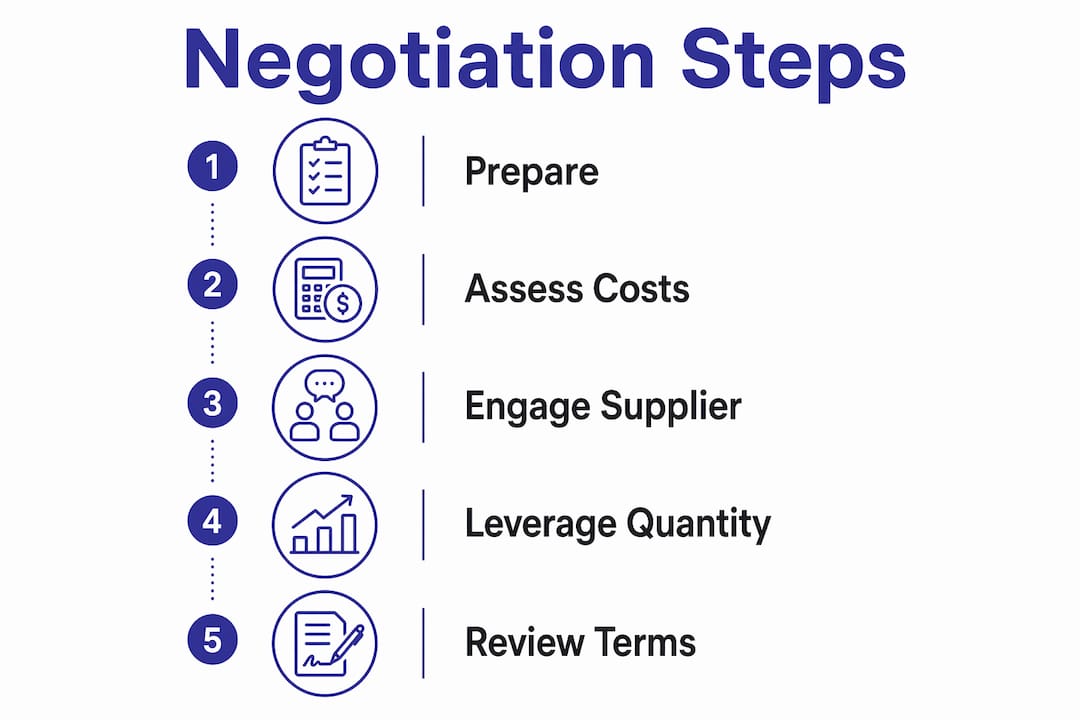
How to evaluate total cost of ownership beyond unit price
Total cost of ownership (TCO) is the full cost of a promotional product from order placement to recipient’s hands. Focusing only on unit price is the most common mistake procurement teams make. It leads to budget surprises and, worse, campaigns that underdeliver because quality was sacrificed for a lower line-item cost.
TCO in promotional products includes:
- Setup and decoration fees (often excluded from headline quotes)
- Branding quality, which directly affects how recipients perceive your brand
- Shipping and logistics, including split shipments or drop-shipping to multiple locations
- Supplier reliability, meaning on-time delivery rates and error resolution speed
- Campaign alignment, or whether the product actually fits the marketing goal
Choosing screen printing over laser engraving to save $0.50 per unit can cost far more in brand perception if the product is a premium gift for a C-suite audience. The decoration method is part of the product’s value, not an afterthought.
Quality considerations matter beyond aesthetics. A poorly imprinted logo on a cheap pen reflects on your brand every time someone uses it. The cost per impression framework, which calculates total spend divided by estimated exposures, shows that a $12 item with 3,000 impressions outperforms a $4 item with 200 impressions every time.
Supplier service levels belong in every TCO calculation. A supplier who delivers on time, resolves errors quickly, and communicates proactively saves your team hours of follow-up. That time has a dollar value. When you evaluate branded giveaways for campaign ROI, factor in the full cost of a supplier relationship, not just the invoice total.
What preparation tactics improve your negotiation outcomes?
Disciplined preparation separates buyers who get good deals from those who accept the first quote. Effective teams build fact bases, plan concessions, and rehearse supplier interactions before any negotiation begins.
Building your fact base
Pull your historical spend data before any supplier conversation. Know your average order size, your most frequently ordered items, and your total annual spend with each supplier. This data gives you credibility and leverage. Suppliers respond differently to buyers who walk in with numbers versus those who rely on gut feel.
Benchmark your current pricing against industry data. With 51.6% of promotional products priced below $10 at entry-level orders, you can quickly identify whether your current quotes are above or below market. Use that gap as your opening position.
Structuring your negotiation approach
| Tactic | When to use it | What it achieves |
|---|---|---|
| Bogey | When budget is genuinely constrained | Signals a hard ceiling without revealing your true flexibility |
| Nibble | After terms are agreed | Adds small concessions like free setup or upgraded packaging |
| Invisible Man | When you need internal approval | Creates space to revisit terms without losing face |
| Dual-source | Before negotiations begin | Creates competitive tension that improves offers |
Transparent communication of budget frameworks accelerates negotiations and helps suppliers propose solutions that fit your goals. Sharing your budget range is not a weakness. It tells the supplier what they are working with and often produces more creative offers than a purely adversarial approach.
Pro Tip: Rehearse your two or three most likely supplier objections before the call. If a supplier says “our costs have gone up,” have a response ready that redirects to volume commitment or payment terms. Preparation turns objections into opportunities.
Anticipate the most common pushbacks: minimum order requirements, setup fee justifications, and shipping cost explanations. Each one has a counter that a prepared buyer can deploy without hesitation. Structured preparation methods consistently improve outcomes in procurement negotiations. The buyers who prepare win more often, and they protect their margins without damaging supplier relationships.
Key Takeaways
Effective promotional item cost negotiation combines fact-based preparation, quantity leverage, and total cost analysis to reduce spend while protecting campaign quality.
| Point | Details |
|---|---|
| Know distributor margins | Distributors target 30–40% gross margins, giving buyers real room to negotiate on price and terms. |
| Use quantity breaks | Moving to the next tier saves 18–40%+ per unit; always ask about the next break before finalizing. |
| Negotiate TCO, not just price | Setup fees, decoration quality, and shipping all affect total spend and campaign ROI. |
| Prepare a fact base | Historical spend data, benchmarks, and a clear BATNA strengthen every negotiation before it starts. |
| Trade concessions strategically | Offer payment terms or future volume commitments to unlock price reductions without damaging relationships. |
What I’ve learned from watching buyers leave money on the table
Most procurement teams I’ve seen negotiate promotional products the same way they negotiate office supplies: they ask for a discount and accept whatever comes back. That approach works occasionally, but it leaves serious money behind.
The buyers who consistently get the best deals do something different. They walk into negotiations knowing the supplier’s margin structure, their own historical spend, and the exact quantity break that unlocks the next price tier. They are not guessing. They are presenting facts and asking the supplier to respond to them.
The other thing I’ve noticed is that the best negotiators never treat price as the only variable. A supplier who waives a $60 setup fee on a repeat order, ships on a longer timeline to save freight costs, or upgrades decoration quality at no charge is giving you real value. That value shows up in campaign results, not just on the invoice.
Short-sighted price battles hurt more than they help. A supplier who feels squeezed will deprioritize your order when production gets busy. They will be slower to resolve errors. They will not call you when a better product hits their catalog. Relationships have economic value, and the best procurement officers treat them that way.
My honest recommendation: invest time in learning the right ordering practices before you negotiate. The more you understand about how suppliers build their quotes, the more precisely you can target the variables that matter.
— Jerry
How Discountswag supports smarter promotional product sourcing
Discountswag gives marketing professionals and procurement officers a direct path to transparent pricing and a wide catalog of corporate promotional products. When you know what you are looking for and how much you should pay, sourcing becomes faster and negotiation becomes easier.
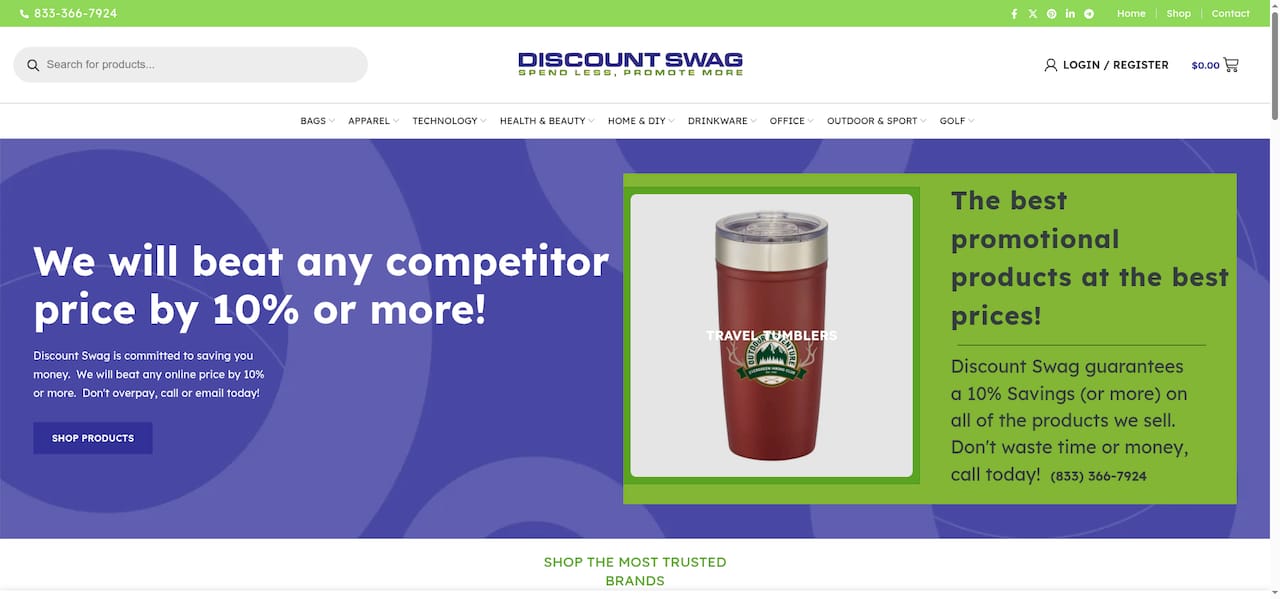
Discountswag’s catalog covers everything from branded tech accessories to custom apparel, with pricing structured to make quantity breaks visible and easy to act on. The 2026 marketer’s guide to promotional items walks through product selection, budget planning, and sourcing decisions in one place. Whether you are building a trade show kit or sourcing gifts for a client campaign, Discountswag provides the product range and pricing clarity to make every negotiation more grounded.
FAQ
What is the average cost of a promotional product?
The median unit cost for promotional products is $9.53, with 51.6% of items priced below $10 at entry-level order quantities. Prices drop significantly at higher volumes, falling 40%+ when moving from 100 to 1,000 units.
How much margin do promotional product distributors make?
Distributors typically target a gross margin of 30–40% after accounting for setup, decoration, and freight costs. That margin range is the benchmark buyers should use when evaluating whether a quote has room to move.
What is the best way to get a lower price on promotional products?
Ask about the next quantity break before requesting a discount. Moving up one tier can reduce per-unit cost by 18–40%, which is a larger saving than most negotiated discounts and requires no adversarial conversation.
Can minimum order quantities be negotiated?
Yes. Digital printing technology has made MOQ reduction possible on many items, allowing smaller runs without the full setup cost burden. Buyers who ask directly about MOQ flexibility often find more room than the catalog suggests.
What should I include in a total cost of ownership calculation for promotional products?
TCO includes the base unit price, setup and decoration fees, shipping and fulfillment costs, and the quality of branding relative to your campaign goals. Focusing on TCO rather than unit price alone produces better budget decisions and stronger campaign results.
 Bottle Carriers
 Mugs
Mugs